
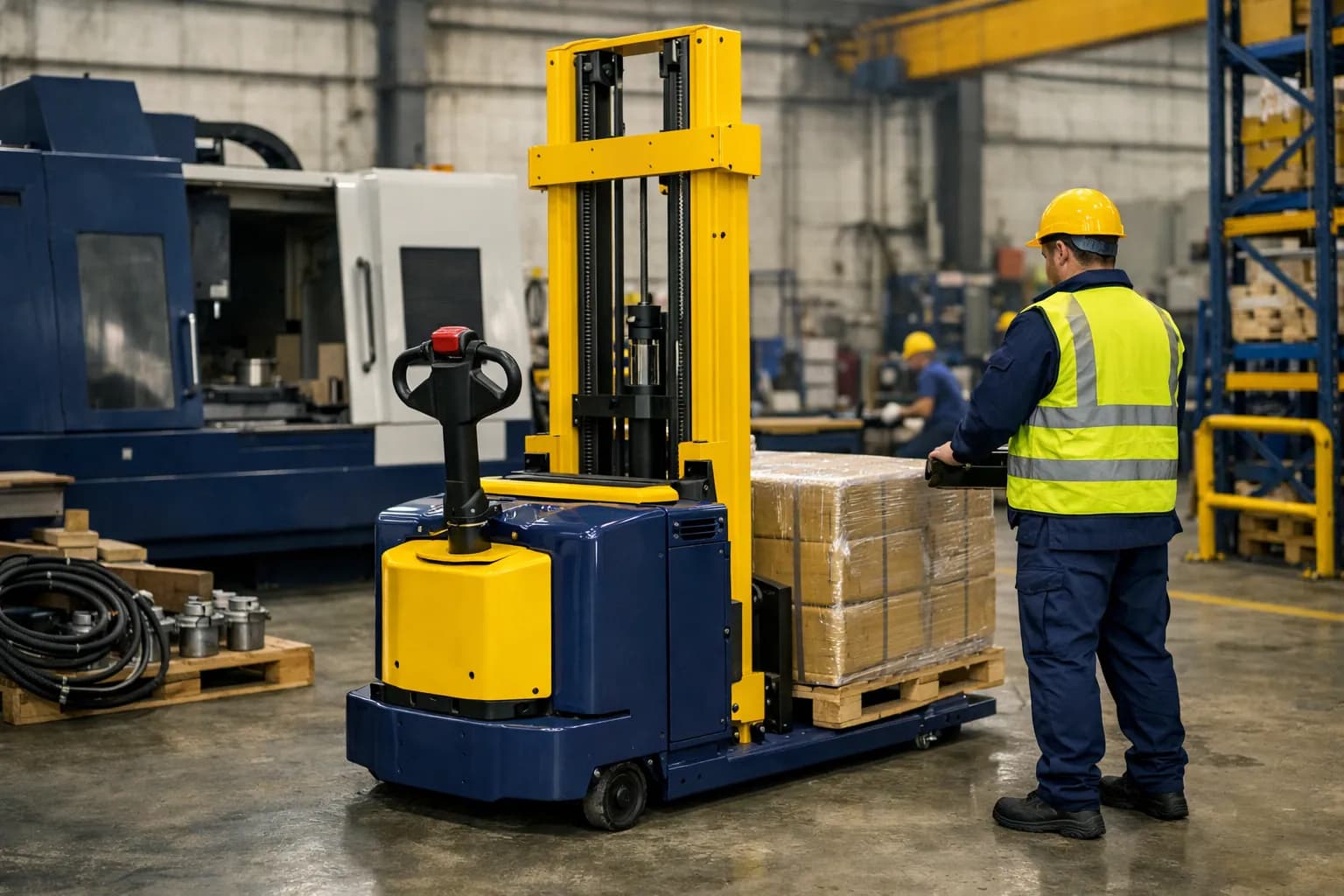
Choosing the right electric stacker for your warehouse can significantly impact the efficiency and productivity of your warehousing operations. Electric stackers have become one of the essential tools in warehouses due to their high efficiency and ease of use. In this guide, we will discuss key considerations for selecting the right electric stacker for your warehouse.
1. Determine Warehouse Requirements
Before anything else, you should identify the specific requirements of your warehouse. These requirements include load capacity, lifting height, and the type of cargo. For instance, if you need a stacker that can handle heavy loads, you should look for stackers with higher capacities.
2. Load Capacity
Electric stackers are typically available in various load capacities. To select the appropriate stacker, consider the maximum weight you will be handling. For example, if your loads weigh up to 2 tons, you can use the Electric Stacker 2 Tons with 3 Meters Telescopic Height.
3. Lifting Height
The height to which your stacker can lift cargo is also crucial. If you need to access tall shelves in your warehouse, you should select a stacker with an appropriate lifting height. For instance, the Electric Stacker 3 Tons with 3 Meters Telescopic Height is a suitable option for this purpose.
4. Type of Stacker
Stackers are divided into electric and manual types. Electric stackers are usually faster and more efficient than manual stackers. However, if you are looking for a more economical option, you might consider the Manual Stacker 500 kg to 1 Ton with 130 cm Height.
5. Build Quality and Safety
The build quality of the electric stacker is very important. Ensure that the stacker you choose is made from high-quality materials and has appropriate safety systems. These systems can include automatic brakes and load sensors that help prevent accidents.
6. Cost and Budget
Cost is a significant factor in selecting an electric stacker. Depending on your budget, you can explore various options. Remember that the initial cost is just one aspect of the purchase, and maintenance and repair costs should also be considered.
7. After-Sales Service
Before purchasing, be sure to check the after-sales service and warranty of the product. These services can include repairs, spare parts supply, and technical consultation. Choosing a supplier with strong after-sales service can help you in the long run.
8. Reviews and Experiences of Others
Before buying, read reviews and experiences from other users. These reviews can help you better understand the strengths and weaknesses of each model and make a better choice.
Ultimately, selecting the right electric stacker for your warehouse depends on your specific needs and conditions. By considering the points discussed, you can make a better decision and benefit from greater efficiency in your warehouse.