
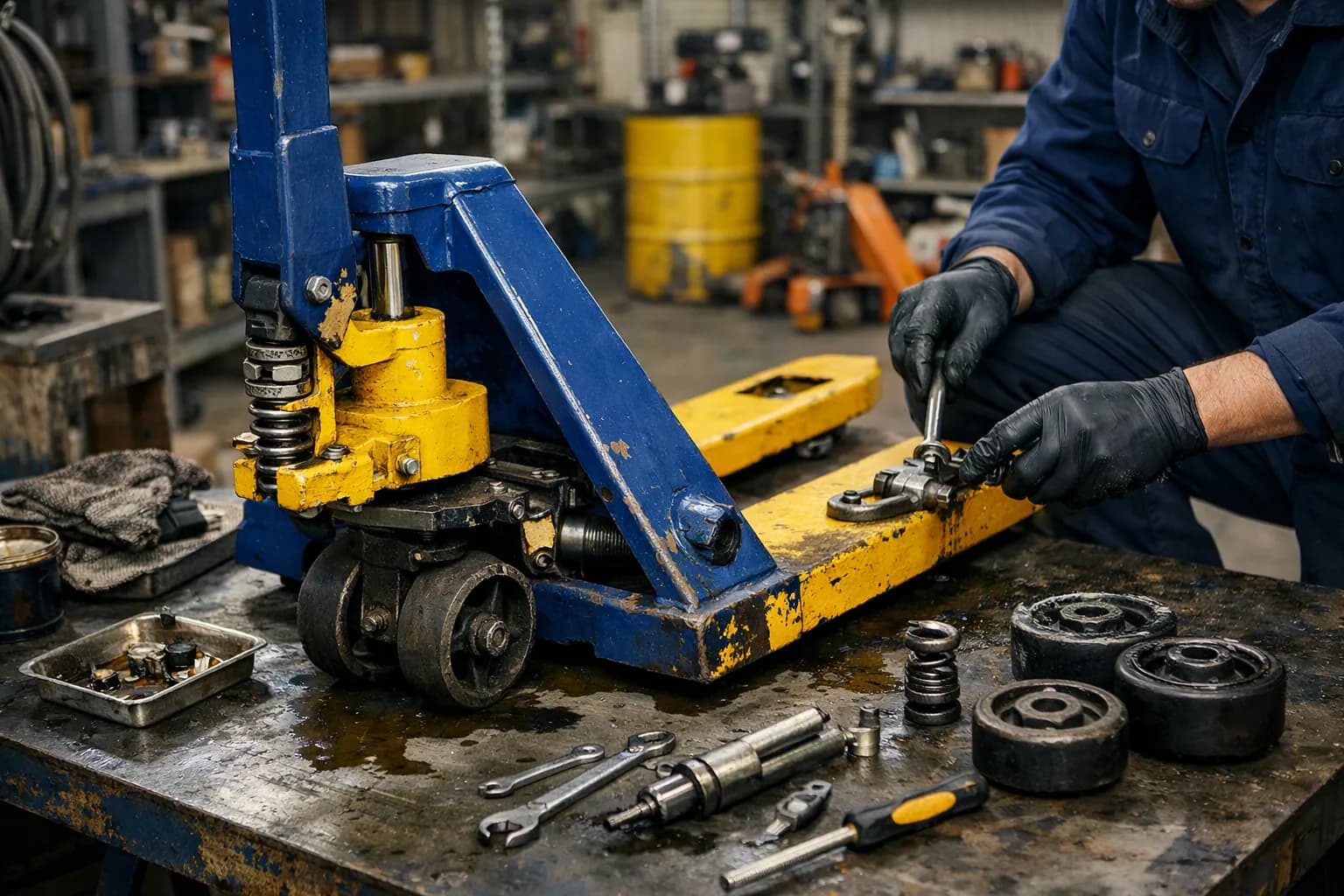
Proper maintenance of pallet jacks is a key factor in increasing their lifespan and efficiency. Pallet jacks, as one of the vital tools in warehouses and distribution centers, are used for moving loads and goods. In this article, we will discuss important aspects of pallet jack maintenance, particularly focusing on leaks, wheels, and the hydraulic pump.
Leaks in Pallet Jacks
Leaks are a common issue in pallet jacks that can arise from various causes, including pump failure, weak connections, or damage to the hydraulic cylinder. The first signs of a leak may include a drop in pressure in the hydraulic system and an inability to lift loads. To prevent leaks, it is essential to regularly inspect the pallet jack and identify and repair any leaks.
Wheels and Rollers of Pallet Jacks
The wheels and rollers of a pallet jack play a crucial role in its proper functioning. If the wheels are damaged or worn out, they can lead to decreased efficiency and increased risk of accidents. To maintain the wheels, they should be regularly inspected, and any signs of wear or damage should be addressed immediately. Additionally, keeping the wheels clean and ensuring there are no debris or obstacles in their path is of utmost importance.
Hydraulic Pump of Pallet Jacks
The hydraulic pump of a pallet jack is one of its key components, responsible for generating pressure to lift loads. To ensure the proper functioning of the pump, the hydraulic oil level should be regularly checked and replaced if necessary. Any leaks in the pump should be repaired immediately. If issues arise, such as an inability to lift loads or unusual sounds from the pump, it is crucial to consult a technician promptly.
Conclusion
Regular maintenance of pallet jacks can significantly extend their lifespan and efficiency. By following the tips outlined in this article, you can prevent serious problems and ensure that your pallet jack is always operating at its best. For more information on pallet jack wheels and rollers, pallet jack hydraulic pump, 2.5 ton hydraulic pallet jack, and 3 ton pallet jack with 3mm plate, please refer to the relevant links.
Pallet jacks are essential tools in warehouses and distribution centers, facilitating the movement of heavy loads with ease. To ensure their longevity and efficiency, regular maintenance is vital. This includes addressing issues related to leaks, wheels, and the hydraulic pump. Proper maintenance not only enhances performance but also ensures safety in the workplace.
Understanding Hydraulic System Leaks
Hydraulic systems are integral to the operation of pallet jacks, enabling them to lift and lower loads smoothly. However, leaks can occur over time due to wear and tear or damage to the hydraulic seals. When leaks happen, they can lead to a drop in pressure within the hydraulic system, resulting in an inability to lift loads effectively. To prevent leaks, it is essential to regularly inspect the pallet jack for any signs of fluid leakage. This includes checking around the hydraulic pump and the seals. If you notice any fluid pooling under the pallet jack or a decrease in lifting capability, it is crucial to address the issue immediately, either by tightening fittings or replacing damaged seals.
Wheels and Rollers of Pallet Jacks
The wheels and rollers of a pallet jack are critical components that ensure smooth movement and maneuverability. If the wheels are damaged or excessively worn, it can lead to decreased efficiency and increase the risk of accidents. Regular inspection of the wheels is necessary to identify any signs of wear, such as cracks, flat spots, or excessive tread wear. If any damage is found, it is important to replace the wheels promptly to maintain optimal performance. Additionally, keeping the wheels clean is essential. Debris, dirt, and grime can accumulate on the wheels, causing them to function poorly. Regular cleaning not only extends the life of the wheels but also ensures safety during operation.
Hydraulic Pump Maintenance
The hydraulic pump is one of the most critical components of a pallet jack, as it generates the pressure required to lift heavy loads. To ensure the pump functions correctly, it is vital to check the hydraulic oil level regularly. Low oil levels can lead to inefficient operation and potential damage to the pump. If the oil appears dirty or contaminated, it should be replaced to maintain optimal performance. Additionally, any leaks in the pump should be addressed immediately. If you notice unusual sounds or if the pallet jack struggles to lift loads, it may indicate a problem with the hydraulic pump. In such cases, consulting a qualified technician is advisable to diagnose and resolve the issue effectively.
Conclusion
Regular maintenance of pallet jacks is essential to ensure their efficiency and longevity. By routinely inspecting for leaks, keeping wheels in good condition, and maintaining the hydraulic pump, you can prevent serious problems and ensure safe operations in your workplace. Implementing a regular maintenance schedule is a proactive approach that can save time and costs associated with repairs and replacements. For more detailed information on specific components, such as pallet jack wheels and rollers, pallet jack hydraulic pumps, 2.5-ton hydraulic pallet jacks, and 3-ton pallet jacks with 3mm plates, please refer to the provided links. Keeping your pallet jack in top condition will ensure smooth operations and a safer working environment.